
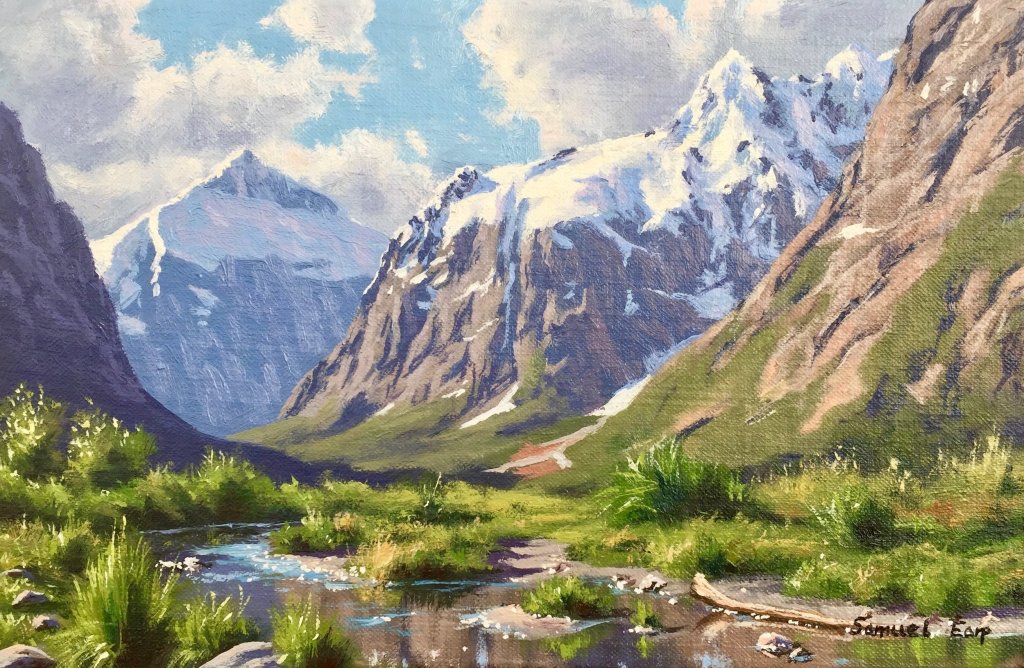
One of the many geographic references in the Stick of Joseph is to a certain “narrow strip of wilderness”:
And it came to pass that the king sent a proclamation throughout all the land, amongst all his people who were in all his land, who were in all the regions round about, which was bordering even to the sea, on the east and on the west, and which was divided from the land of Zarahemla by a narrow strip of wilderness, which ran from the sea east even to the sea west, and round about on the borders of the seashore, and the borders of the wilderness which was on the north by the land of Zarahemla, through the borders of Manti, by the head of the river Sidon, running from the east towards the west — and thus were the Lamanites and the Nephites divided.
(Alma 22:27 LDS; 13:69 RLDS; 13:13 Stick of Joseph)
Many commentators have interpreted this “narrow strip of wilderness” to be a range of mountains. For example, in his book Exploring the Lands of the Book of Mormon, Joseph Allen, Ph.D. identifies this narrow strip with the Chiapas Mountains (p. 297). In his book An Ancient American Setting for the Book of Mormon, John Sorenson identifies this strip as “a range of uninhabited mountains paralleling the coastal zone” (p. 26) and in his book Voices from the Dust, Glenn Scott says that the land of Nephi-Lehi was “divided from the land of Zarahemla by a narrow strip of wilderness (mountains).” (p. 152)
It has been proposed that the Mulekites were an Aramaic speaking peoples, and that when they merged with the Nephites, who spoke Hebrew, there was an influx of Aramaic into the Nephite language. (See Did the Mulochites Speak Aramaic?)
So if this “narrow strip of wilderness” was really a range of mountains, then why does the Stick of Joseph call it “wilderness”? The answer may lie in the original Nephite language behind this word. The underlying word, may be the Aramaic word טורא which can mean “wilderness” or “open country”, for example in the Old Syriac Aramaic version of Matthew 3:4 there is reference to “the honey of the wilderness/open country (טורא)” and in the Old Syriac Aramaic version of Luke 12:28 to “the grass that today is in the wilderness/field/open country (טורא)” but which can also mean “hills” or “mountains”, for example in the Aramaic of Targum Onkelos to Exodus 3:12 where Moshe is told “you shall serve before YHWH upon this mountain (טורא).”
Taking this information into account. the word Joseph Smith translated as “wilderness” might also have been translated “mountains”.
This research and this page are made possible by donations from our readers. Please consider supporting this work with a donation.
 Restoration Torah Research