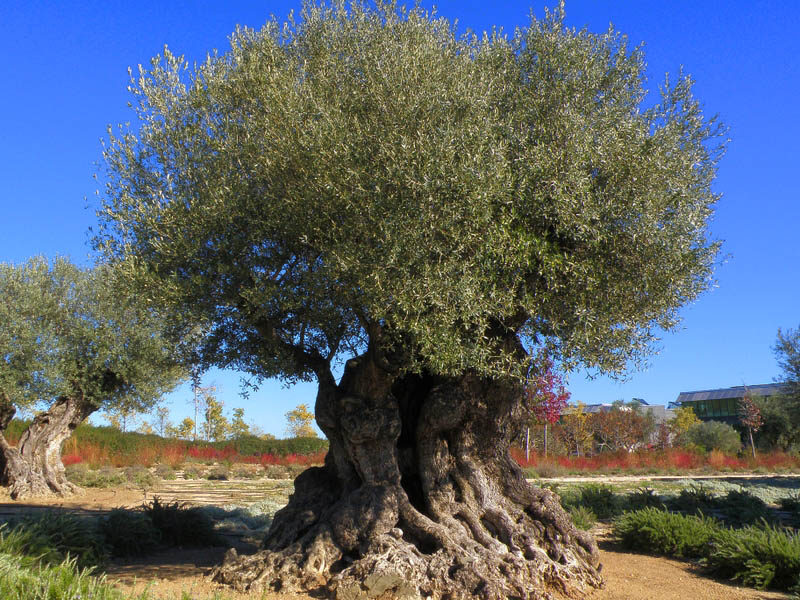
One of the most profound prophecies of the Restoration is to be found in Paul’s Parable in the Olive Tree:
1 I say then, Hath God cast away his people? God forbid. For I also am an Israelite, of the seed of Abraham, of the tribe of Benjamin.
2 God hath not cast away his people which he foreknew. Wot ye not what the scripture saith of Elias? how he maketh intercession to God against Israel, saying,
3 Lord, they have killed thy prophets, and digged down thine altars; and I am left alone, and they seek my life.
4 But what saith the answer of God unto him? I have reserved to myself seven thousand men, who have not bowed the knee to the image of Baal.
5 Even so then at this present time also there is a remnant according to the election of grace.
6 And if by grace, then is it no more of works: otherwise grace is no more grace. But if it be of works, then is it no more grace: otherwise work is no more work.
7 What then? Israel hath not obtained that which he seeketh for; but the election hath obtained it, and the rest were blinded
8 (According as it is written, God hath given them the spirit of slumber, eyes that they should not see, and ears that they should not hear;) unto this day.
9 And David saith, Let their table be made a snare, and a trap, and a stumbling block, and a recompence unto them:
10 Let their eyes be darkened, that they may not see, and bow down their back alway.
11 I say then, Have they stumbled that they should fall? God forbid: but rather through their fall salvation is come unto the Gentiles, for to provoke them to jealousy.
12 Now if the fall of them be the riches of the world, and the diminishing of them the riches of the Gentiles; how much more their fulness?
13 For I speak to you Gentiles, inasmuch as I am the apostle of the Gentiles, I magnify mine office:
14 If by any means I may provoke to emulation them which are my flesh, and might save some of them.
15 For if the casting away of them be the reconciling of the world, what shall the receiving of them be, but life from the dead?
16 For if the firstfruit be holy, the lump is also holy: and if the root be holy, so are the branches.
17 And if some of the branches be broken off, and thou, being a wild olive tree, wert graffed in among them, and with them partakest of the root and fatness of the olive tree;
18 Boast not against the branches. But if thou boast, thou bearest not the root, but the root thee.
19 Thou wilt say then, The branches were broken off, that I might be graffed in.
20 Well; because of unbelief they were broken off, and thou standest by faith. Be not highminded, but fear:
21 For if God spared not the natural branches, take heed lest he also spare not thee.
22 Behold therefore the goodness and severity of God: on them which fell, severity; but toward thee, goodness, if thou continue in his goodness: otherwise thou also shalt be cut off.
23 And they also, if they abide not still in unbelief, shall be graffed in: for God is able to graff them in again.
24 For if thou wert cut out of the olive tree which is wild by nature, and wert graffed contrary to nature into a good olive tree: how much more shall these, which be the natural branches, be graffed into their own olive tree?
25 For I would not, brethren, that ye should be ignorant of this mystery, lest ye should be wise in your own conceits; that blindness in part is happened to Israel, until the fulness of the Gentiles be come in.
26 And so all Israel shall be saved: as it is written, There shall come out of Sion the Deliverer, and shall turn away ungodliness from Jacob:
27 For this is my covenant unto them, when I shall take away their sins.
(Romans 11:1-27 KJV)
(This Olive Tree Parable is actually an abridgement of the Olive Tree Parable found in the lost book of the prophet Zenos, found in the Brass Plates, and quoted at length in the Stick of Joseph (Jacob 5:1-6:13 LDS; 3:30-5:18 RLDS Ya’akov 3:7-4:2 Stick of Joseph) and which is referenced elsewhere in the Stick of Joseph (1Nephi 10:12-14 LDS; 3:16-19 RLDS; 1Nefi 3:4 Stick of Joseph; 1Nephi 15:7-16 LDS; 4:8-24 RLDS; 1Nefi 4:2-3 Stick of Joseph).)
You may not be aware of how much material, especially significant to the restoration, is embedded in Paul’s recounting of this parable.
The Two Sticks
First of all, it is important to realize that the Hebrew word for “tree” is עץ (Etz), which not only means “tree” but also means “stick”. Here we have a prophecy of two “trees” which represent the Two Houses of Israel. If we go back to Romans chapter 9 to get the context, we read:
23 And that he might make known the riches of his glory on the vessels of mercy, which he had afore prepared unto glory,
24 Even us, whom he hath called, not of the Jews only, but also of the Gentiles?
25 As he saith also in Osee, I will call them my people, which were not my people; and her beloved, which was not beloved.
26 And it shall come to pass, that in the place where it was said unto them, Ye are not my people; there shall they be called the children of the living God.
27 Esaias also crieth concerning Israel, Though the number of the children of Israel be as the sand of the sea, a remnant shall be saved:
(Rom. 9:23-27 KJV)
Here Romans 9:35-36 quotes from the Book of “Osee” (Hosea). In context “the people who are not my people” are “the children of Israel”:
Yet the number of the children of Israel shall be as the sand of the sea, which cannot be measured nor numbered; and it shall come to pass, that in the place where it was said unto them, Ye are not my people, there it shall be said unto them, Ye are the sons of the living God.
(Hosea 1:10 KJV)
Whom Hosea contrasts with the “children of Judah”:
Then shall the children of Judah and the children of Israel be gathered together, and appoint themselves one head, and they shall come up out of the land: for great shall be the day of Jezreel.
(Hosea 1:11 KJV)
So Paul’s “Gentiles” in Romans 9-11 are the House of Israel and his “Israel” is the the House of Judah. (The House of Israel had lost their identity and become identified as “Gentiles” as we see in Gen. 48:19 and Isaiah 9:1, in both of these passages the Hebrew word for “nations” is goyim (Gentiles))
So Paul’s two olive “trees” represent the House of Israel and the House of Judah. This brings us to Ezekiel’s prophecy about the two “sticks” (the same word עץ which can mean “tree” or “stick”) where the two sticks represent the Two Houses of Israel:
15 The word of the LORD came again unto me, saying,
16 Moreover, thou son of man, take thee one stick, and write upon it, For Judah, and for the children of Israel his companions: then take another stick, and write upon it, For Joseph, the stick of Ephraim, and for all the house of Israel his companions:
17 And join them one to another into one stick; and they shall become one in thine hand.
18 And when the children of thy people shall speak unto thee, saying, Wilt thou not shew us what thou meanest by these?
19 Say unto them, Thus saith the Lord GOD; Behold, I will take the stick of Joseph, which is in the hand of Ephraim, and the tribes of Israel his fellows, and will put them with him, even with the stick of Judah, and make them one stick, and they shall be one in mine hand.
20 And the sticks whereon thou writest shall be in thine hand before their eyes.
(Ezekiel 37:15-20 KJV)
In the most literal understanding of these verses, the two “sticks” represent the Two Houses of Israel. However, the Targum (ancient Jewish Aramaic paraphrase) of this prophecy, gives us a deeper understanding. We read in Targum Jonathan:
וַהֲוָה פִתְגָם נְבוּאָה מִן קֳדָם יְיָ עִמִי לְמֵימָר:
וְאַתְּ בַּר אָדָם סַב לָךְ לוּחָא חֲדָא וּכְתוֹב עֲלוֹהִי לְשִׁבְטָא דִיהוּדָה וְלִבְנֵי יִשְׂרָאֵל אַחֵיהוֹן וְסַב לוּחָא חֲדָא וּכְתוֹב עֲלוֹהִי לְשִׁבְטָא דְיוֹסֵף דִי הוּא שִׁבְטָא דְאֶפְרַיִם וְכָל בֵּית יִשְׂרָאֵל אֲחֵיהוֹן:
וְתַקְרֵיב יַתְהוֹן חַד לְוַת חַד לָךְ לְלוּחָא חַד וִיהוֹן לְחוֹד בִּידָךְ:
וְכַד יֵימְרוּן לָךְ בְּנֵי עַמָךְ לְמֵימָר הֲלָא תְחַוֵי לָנָא מָה אִלֵין לָךְ:
אִתְנַבֵּי לְהוֹן כִּדְנַן אֲמַר יְיָ אֱלֹהִים הָא אֲנָא מְקָרִיב יַת שִׁבְטָא דְיוֹסֵף דִי הוּא שִׁבְטָא דְאֶפְרַיִם וְשִׁבְטֵי יִשְׂרָאֵל אֲחֵיהוֹן וַאֲחַבֵּיר יַתְהוֹן עֲלוֹהִי יַת שִׁבְטָא דִיהוּדָה וְאַעְבְּדִינוּן לְעַמָא חַד וִיהוֹן חַד קֳדָמָי:
וִיהוֹן לוּחַיָא דִי תִכְתּוֹב עֲלֵיהוֹן בִּידָךְ לְעֵינֵיהוֹן:
And it came to pass a sentence came upon me from before YHWH saying: And you son of man, take you one plate and write upon it for the tribes of Judah, and to the sons of Israel, their brothers. And take one plate and write upon it for the tribe of Joseph which is the tribe of Ephraim, and all the House of Israel their brothers. And join the plates one to another, and they shall become one in your hand. And when the children of your people shall speak to you saying: “Will you not show us what these are?” I prophesied to them thus says YHWH Elohim, behold I shall join the tribe of Joseph which is the tribe of Ephraim, and the tribes of Israel their brothers, and I will cause them to have fellowship with the tribe of Judah and I will make them one people and they shall be one before me. And the plates which were written upon will be in your hand to their eyes.
(Ezek. 37:15-20 Targum Jonathan)
‘Here the Targum paraphrases and interprets the Hebrew word “stick” (עץ) with the Aramaic word לוחא (lucha) which literally means “plate” or “tablet” and is the very word one would use to describe the Brass Plates of the Stick of Judah and the Gold Plates of the Stick of Joseph!
And according to the Talmud, the Targum Jonathan was derived from traditions passed down from the prophets Haggai, Zechariah and Malachi:
The Targum of the Prophets was composed by Jonathan ben Uzziel under the guidance of [traditions handed down from] Haggai, Zechariah and Malachi, and the land of Israel [thereupon] quaked over an area of four hundred parasangs by four hundred parasangs, and a Bath Kol [voice from heaven] came forth and exclaimed, Who is this that has revealed My secrets to mankind? Jonathan b. Uzziel thereupon arose and said, It is I who have revealed Thy secrets to mankind. It is fully known to Thee that I have not done this for my own honour or for the honour of my father’s house, but for Thy honour l have done it, that dissension may not increase in Israel.
(b.Megillah 3a)
In other words, these biblical prophets knew that the two “sticks” not only represented the two Houses of Israel. but also, on a deeper level, two sets of written records associated with each of the Two Houses, written on “plates”!
Paul is telling us that this restoration of the grafting in of branches from the Wild Olive Tree into the Tame Olive Tree, is directly tied to the growing together of these two sets of records typified by the Brass Plates (i.e. the Stick of Judah) and the Gold Plates (i.e. the Stick of Joseph)!
(See 2Nephi 3:12-13 LDS; 2:19-24 RLDS; 2Nefi 2:4 Stick of Joseph)
A Sealed Book
Returning to Paul’s telling of the Parable of the Two Olive Trees in Romans 11, Paul speaks of the apostasy for which this restoration is the cure, saying:
(According as it is written, God hath given them the spirit of slumber, eyes that they should not see, and ears that they should not hear;) unto this day
(Romans 11:8)
Here Paul is quoting Isaiah 29:10:
For the LORD hath poured out upon you the spirit of deep sleep, and hath closed your eyes: the prophets and your rulers, the seers hath he covered.
(Isaiah 29:10 KJV)
By quoting this passage, Paul is telling us that the Restoration offered by his Olive Tree Parable is parallel to that presented in Isaiah 29:
10 For the LORD hath poured out upon you the spirit of deep sleep, and hath closed your eyes: the prophets and your rulers, the seers hath he covered.
11 And the vision of all is become unto you as the words of a book that is sealed, which men deliver to one that is learned, saying, Read this, I pray thee: and he saith, I cannot; for it is sealed:
12 And the book is delivered to him that is not learned, saying, Read this, I pray thee: and he saith, I am not learned.
13 Wherefore the Lord said, Forasmuch as this people draw near me with their mouth, and with their lips do honour me, but have removed their heart far from me, and their fear toward me is taught by the precept of men:
14 Therefore, behold, I will proceed to do a marvellous work among this people, even a marvellous work and a wonder: for the wisdom of their wise men shall perish, and the understanding of their prudent men shall be hid.
15 Woe unto them that seek deep to hide their counsel from the LORD, and their works are in the dark, and they say, Who seeth us? and who knoweth us?
16 Surely your turning of things upside down shall be esteemed as the potter’s clay: for shall the work say of him that made it, He made me not? or shall the thing framed say of him that framed it, He had no understanding?
17 Is it not yet a very little while, and Lebanon shall be turned into a fruitful field, and the fruitful field shall be esteemed as a forest?
18 And in that day shall the deaf hear the words of the book, and the eyes of the blind shall see out of obscurity, and out of darkness.
(Isaiah 29:10-18 KJV)
So the coming for forth of this book, corresponds to the “plates” which come together in Ezekiel 37 (in the Targum).
(See 2Nephi 27:1-5 LDS; 11:116-124 RLDS; 2Nefi 11:18 Stick of Joseph)
The Fullness of the Gentiles
Finally Paul tells us that this restoration will ultimately bring about the “fullness of the Gentiles”:
For I would not, brethren, that ye should be ignorant of this mystery, lest ye should be wise in your own conceits; that blindness in part is happened to Israel, until the fulness of the Gentiles be come in.
(Romans 11:25 KJV)
And this is actually a reference back to a passage in Genesis:
18 And Joseph said unto his father, Not so, my father: for this is the firstborn; put thy right hand upon his head.
19 And his father refused, and said, I know it, my son, I know it: he also shall become a people, and he also shall be great: but truly his younger brother shall be greater than he, and his seed shall become a multitude of nations.
(Gen. 48:18-19 KJV)
The original Hebrew for this phrase “multitude of nations” could also be translated “fullness of gentiles”. And the night Joseph Smith was visited by an angel who would eventually lead him to the gold plates, he was told that “the fullness of the Gentiles was soon to come in” (Joseph Smith – History 1:41)
(See also 1Nephi 15:13 LDS; 4:16 RLDS 1Nefi 4:3 Stick of Joseph and 3Nephi 16:4 LDS; 7:27-28 RLDS; 3Nefi 7:4 Stick of Joseph)
How could Joseph Smith have known that all of these passages would tie together, and point to information revealed in the ancient Targum Jonathan, about the revealing of a “sealed book” associated with the House of Joseph, made on metal plates?
This research and this page are made possible by donations from our readers. Please consider supporting this work with a donation.
 Restoration Torah Research
4 responses to “Paul’s Parable of the Olive Tree and Restoration”
I assume the connection between “stick, wood, tree” and “plate” comes from wood and wax writing tables, which are quite ancient.
https://en.m.wikipedia.org/wiki/Wax_tablet
Any additional comment on this connection?
LikeLike
The Aramaic word used in the Targum can also refer to inscriptions on metal plates, In fact all of the Hebrew translations of the Stick of Joseph, use the Hebrew cognate of this Aramaic word for “plate(s)”. In fact the “Copper Scroll” found among the Dead Sea Scrolls, is a “brass plate” in that Biblical Hebrew does not distinguish between copper and copper alloys, so that the same Hebrew word is used for copper, bronze or brass. So in the Dead Sea Scrolls, we have an actual example of ancient Hebrews writing a record on a “brass plate”.
LikeLike
[…] In a recent blog I wrote about the two olive trees , and that through their common Jewish roots the Stick of Judah and the Stick of Joseph would grow together. Today I want to talk about the Great Whore of Babylon, and how she was born from the rejection of Jewish Roots. […]
LikeLike
[…] that the Targum Jonathan to this passage, paraphrases the two sticks as two “plates”. Click here to read that blog.Nefi writes in the Book of Stick of Joseph:“… mine eyes hath beheld the things of the Jews, and […]
LikeLike